
1. India aspires to transform a world production hub. What are the largest alternatives and demanding situations for the Indian mechanical device software {industry} achieve international competitiveness, and what adjustments are nonetheless required?
On alternatives and demanding situations for the Indian mechanical device software {industry}:
India’s production ambitions are actual, and the call for indicators are robust — automobile, EV parts, defence, aerospace, and normal engineering are all scaling up, and each and every any such sectors wishes precision mechanical device equipment to get there. That’s the largest alternative: a in fact massive and rising home marketplace that not desires to easily import capital apparatus however desires a competent native provide chain. Schemes like PLI and the rush for import substitution in capital items are giving Indian mechanical device software developers an actual runway, and there’s rising self assurance amongst end-users that “Make in India” equipment can fit the reliability they used to supply simplest from Europe, Japan, or Taiwan.
From the place I sit down — constructing laser reducing, welding, marking, and bending techniques for sheet steel fabrication — I’d say the largest alternative could also be the largest hole: era intensity. Indian producers are superb at meeting, software engineering, and cost-effective supply, however we nonetheless import the true value-add — fiber laser resources, high-end CNC controllers, servo drives, precision linear guides, and optics. Till we construct a home element ecosystem for those, we’re necessarily constructing world-class machines round imported hearts, which limits each our charge competitiveness and our talent to keep watch over high quality and lead instances.
The opposite main problem is professional manpower. Running and keeping up complex laser and CNC techniques calls for a distinct caliber of technical coaching than conventional mechanical device equipment, and our ITI and polytechnic curricula haven’t stuck up with the place the era in reality is. We finally end up coaching operators in-house, which is costly and slows scale-up.
Capital charge could also be an actual constraint — mechanical device software production is capex-heavy and R&D-intensive, and Indian financing buildings aren’t at all times fitted to the lengthy gestation classes this {industry} wishes earlier than returns display up.
What wishes to modify, individually: sustained funding in indigenous element era (no longer simply ultimate meeting), more potent industry-academia partnerships for skilling on complex production techniques, more uncomplicated and less expensive long-term capital for mechanical device software SMEs, and constant high quality certification requirements so Indian-made machines are relied on the world over, no longer simply regionally. International competitiveness received’t come from charge on my own — it is going to come from India controlling extra of the era stack, no longer simply the overall product.
2. Innovation nowadays extends past merchandise. How is your organisation riding innovation throughout production processes, buyer revel in, sustainability, personnel construction or virtual transformation?
On innovation past merchandise:
Innovation for us doesn’t forestall on the mechanical device we send — it runs via how we construct it, how we reinforce it after the sale, and the way sustainably we function. A couple of spaces the place we’ve centered intentionally:
Production processes: We’ve moved from viewing our laser reducing, welding, marking, and bending answers as standalone machines to engineering them as built-in fabrication techniques. That suggests tighter design-for-manufacturability at our personal finish — decreasing cycle instances, bettering repeatability, and constructing within the automation and material-handling hyperlinks that permit a buyer’s store surface run as a attached line somewhat than remoted machines. Fifteen years on this industry has taught us that the true innovation alternative now could be within the workflow across the mechanical device, no longer simply the mechanical device itself.
Buyer revel in: Commercial consumers don’t simply need apparatus, they would like uptime. We’ve been making an investment in far flung diagnostics and quicker reaction carrier fashions, so problems get flagged and steadily resolved earlier than they change into downtime. We’re additionally spending extra time in advance with shoppers on software engineering — serving to them make a choice the fitting laser energy, bending tonnage, or marking configuration for his or her precise product combine, somewhat than promoting a generic answer.
Sustainability: Laser processing is inherently extra energy- and material-efficient than many typical reducing or fabrication strategies — higher nesting, much less materials waste, decrease consumables utilization. We’re pushing this additional through bettering the calories potency of our fiber laser techniques and serving to shoppers cut back scrap charges, which is a sustainability win that still has a right away charge get advantages for them, so adoption comes naturally.
Group of workers construction: Since complex laser and CNC techniques want professional operators, we run structured in-house coaching for our shoppers’ groups — no longer simply at commissioning, however ongoing skill-building as we unlock new options. Internally, we’re constructing an identical coaching pipelines for our personal engineers, since holding and upskilling skill is as vital to innovation as any new product.
Virtual transformation: We’re progressively constructing IoT-enabled tracking into our machines — giving shoppers visibility into mechanical device well being, usage, and upkeep schedules via knowledge somewhat than guesswork. That is nonetheless evolving, however the route is obvious: the following aggressive edge in mechanical device equipment will come as a lot from device and information as from mechanical and optical engineering.
Innovation, for us, is in reality about remaining the distance between what a mechanical device is able to and what a buyer in reality achieves with it day after day.
cut back materials waste, fortify useful resource utilisation and transfer against extra sustainable manufacturing.
For us, innovation approach often bettering era, other people and processes to make production smarter, extra effective and future-ready.
3. Production luck increasingly more will depend on collaboration throughout OEMs, providers, era suppliers, academia and startups. How do you notice partnerships shaping the way forward for production, and what function does your organisation play on this ecosystem?
On partnerships shaping the way forward for production:
No unmarried corporate nowadays can personal all of the price chain of complex production, and in truth, looking to would sluggish you down somewhat than mean you can. The complexity of contemporary mechanical device equipment — precision mechanics, laser optics, CNC controls, device, automation — approach actual innovation now occurs on the intersection of more than one gamers, no longer inside the 4 partitions of 1 manufacturing facility. I see partnerships as much less of a “great to have” and extra as the real working fashion for this decade.
For us, that performs out in a couple of techniques:
With era suppliers: We paintings carefully with international element and laser supply producers to stick present with fiber laser era, keep watch over techniques, and automation modules, somewhat than looking to expand each and every sub-system in-house. This shall we us center of attention our personal R&D on formula integration, software engineering, and fixing the particular issues Indian sheet steel fabricators face — which is the place we upload essentially the most price.
With OEMs and end-users: A few of our absolute best product enhancements have come without delay from buyer comments loops — a fabricator telling us the place a bending series is inefficient, or a role store flagging a marking accuracy factor in an actual manufacturing surroundings. We deal with our shoppers as co-developers, no longer simply consumers, and that shapes our product roadmap greater than any interior brainstorming consultation does.
With providers: A mechanical device is simplest as dependable as its weakest sourced element, so we’ve labored to construct long-term, quality-anchored relationships with our provider base somewhat than purely transactional, lowest-cost sourcing. That steadiness issues so much while you’re promising shoppers uptime and precision.
With academia and startups: That is a space the place the {industry} as an entire — together with us — must do extra. System software firms in India have historically under-invested in educational collaboration in comparison to international friends. We see actual alternative in partnering with engineering institutes for carried out R&D and with startups running on AI-driven high quality inspection, predictive upkeep, and automation device — spaces that transfer quicker out of doors a conventional machine-building group than within one.
Our function on this ecosystem, as I see it, is to be an integrator and a relied on native spouse — any individual who brings global-grade laser and fabrication era, adapts it to Indian shop-floor realities, and remains shut sufficient to shoppers, providers, and era companions that innovation assists in keeping flowing in each instructions. The way forward for production competitiveness in India received’t be constructed through anyone corporate running on my own — it is going to be constructed through how neatly all of us attach.
4. Having a look forward to 2030, what is going to outline a a success mechanical device software corporate? Which features, applied sciences or management qualities will differentiate the {industry}’s destiny leaders?
On what is going to outline a a success mechanical device software corporate through 2030:
Through 2030, I don’t suppose the differentiator might be who builds the quickest laser or the most powerful bending press — the baseline mechanical and optical capacity throughout critical gamers will in large part converge. What is going to separate the leaders from the remaining is how intelligently the mechanical device behaves, how neatly the corporate understands its buyer’s industry, and the way resilient its provide chain is.
A couple of features I’d wager on:
Tool and information, no longer simply {hardware}. The machines that win would be the ones that expect disasters earlier than they occur, optimize their very own reducing or bending parameters in actual time, and hand operators actionable knowledge somewhat than simply readouts. An organization that treats itself purely as a mechanical engineering industry through 2030 might be in the back of. We’re already seeing this shift, and it is going to simplest boost up.
Area intensity over normal capacity. Consumers received’t desire a generic mechanical device software provider — they’ll desire a spouse who deeply understands their particular procedure, whether or not that’s sheet steel fabrication, automobile body-in-white, or precision enclosures. Software wisdom will subject up to the mechanical device specification sheet.
Provide chain resilience. The previous few years have proven how uncovered international production is to element shortages and geopolitical disruption. Firms that experience constructed redundancy into their sourcing — and preferably, extra indigenous keep watch over over vital parts like laser resources and controllers — can have an actual edge over the ones nonetheless totally depending on single-source imports.
Sustainability as a design concept, no longer an add-on. Power potency, materials usage, and lower-waste processing received’t be a advertising and marketing line through 2030 — they’ll be a procurement requirement for lots of shoppers, particularly the ones exporting to markets with tightening environmental compliance.
On management qualities, I’d level to a few issues:
Convenience with steady reinvention. The tempo of alternate in laser resources, automation, and controls approach a management group that will get relaxed and prevents studying will fall in the back of temporarily. The leaders who win would be the ones nonetheless asking “what’s subsequent” even if the present product is doing neatly.
Buyer-obsession over product-obsession. The most productive roadmaps through 2030 will come from listening tougher to buy flooring, no longer from engineering groups running in isolation.
Willingness to spouse somewhat than construct the whole thing on my own. As I discussed previous, the firms that plug into the fitting ecosystem of era suppliers, academia, and startups will transfer quicker than the ones looking to do all of it in-house.
If I needed to summarize it in a single line: the mechanical device software leaders of 2030 received’t simply be apparatus producers — they’ll be production intelligence companions to their shoppers.
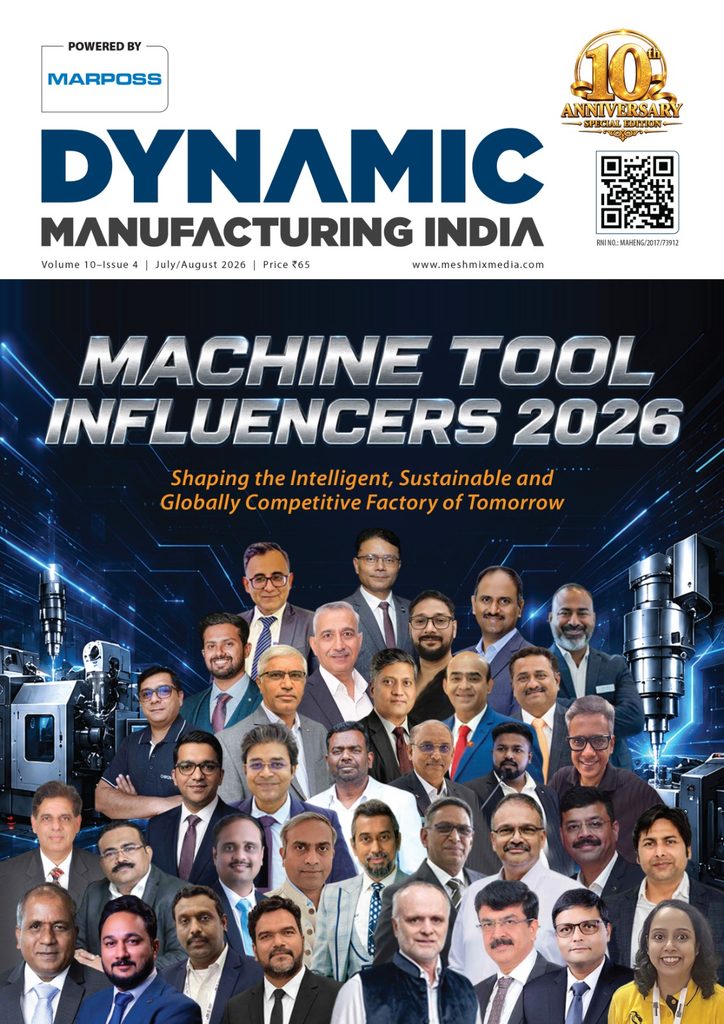
5. As one of the vital System Device Influencers 2026, what message do you want to proportion with the following technology of producing execs and marketers who will form India’s business destiny?
A message for the following technology of producing execs and marketers:
If there’s something 15 years on this {industry} has taught me, it’s that production rewards endurance and punishes shortcuts. This isn’t a industry the place you construct one thing suave in a storage and scale it in eighteen months — it takes years to earn the consider of a store surface, to get a mechanical device dependable sufficient {that a} buyer stakes their manufacturing agenda on it, to construct a emblem that suggests one thing when a fabricator is opting for between you and a longtime global title. To the younger engineers and marketers coming into this area, my truthful recommendation is: be keen to play the lengthy recreation. The rewards are actual, however they arrive to those that keep in it lengthy sufficient to grasp it.
Don’t be intimidated through the truth that such a lot of the deep era — laser resources, precision controls, complex servo techniques — remains to be ruled through international gamers. That hole is strictly the chance. India doesn’t want extra assemblers of imported parts; it wishes engineers and founders keen to head deep into the exhausting issues — optics, fabrics science, keep watch over algorithms, energy electronics — and construct authentic highbrow assets right here. That’s a tougher trail than techniques integration, nevertheless it’s the person who will outline whether or not India turns into an actual production hub or only a production vacation spot.
Get with regards to the store surface early for your occupation, even supposing your ambitions are in device, design, or industry. One of the vital absolute best inventions I’ve observed on this {industry} didn’t come from a lab — they got here from observing an operator combat with a mechanical device and asking “why does it must paintings this fashion?” Production remains to be a hands-on self-discipline, and the pros who perceive each the engineering and the sensible truth of manufacturing will at all times have an edge over those that simplest perceive one.
And in spite of everything — don’t look forward to the ecosystem to be absolute best earlier than you get started. Skilling gaps, financing demanding situations, import dependencies — those are all actual, and so they’re additionally precisely what our technology has been running to mend. You don’t want each and every piece in position to start; you wish to have the conviction to construct anyway, and the humility to continue learning because the era strikes. India’s business destiny received’t be constructed through anyone corporate or anyone technology — it’s a relay, and the following leg is yours to run.
do talk over with – https://lasertechnologies.co.in/