
Preventative repairs can change into an sudden, pricey, reactive restore cycle right into a predictable, proactive control technique. Is it well worth the hassle, although? We predict so. That’s why we ready recommended repairs schedules in keeping with trade absolute best practices.
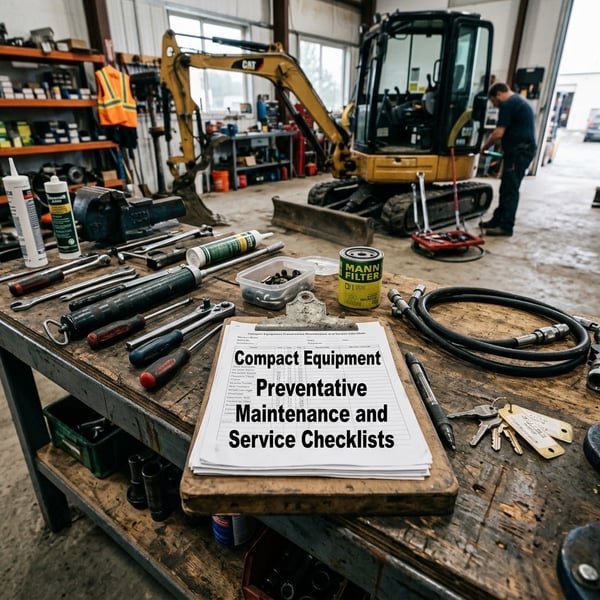
Why Preventative Upkeep is An important to Your Apparatus
Minimizing Downtime: An sudden breakdown of a unmarried number one asset (like an excavator) can stall a complete activity web site, resulting in misplaced productiveness prices of $450 to $760 in keeping with hour (as an example), plus emergency technician shuttle and service charges. It could possibly additionally throw a role at the back of agenda, inflicting issues in your shopper and in your recognition.
Fighting “Domino-Impact” Catastrophic Disasters: It’s a truth: apparently minor, reasonably priced repairs disasters may end up in very pricey element injury. As an example, failing to exchange a $20 case drain clear out ends up in line clogging, which spikes inner hydraulic strain. That strain spike will ultimately blow out the principle shaft seal, dilute your tools oil, ruin inner bearings/pistons, and will crack the duvet plate. Failing to exchange a $20 phase can ruin a multi-thousand-dollar ultimate force motor.
Decreasing TCO: Preventative repairs reduces shifting friction, which at once lowers gas intake, limits portions put on, and improves general tractive effort. It additionally reduces restore prices and will increase productiveness.
Guaranty Compliance & Resale Price Optimization: Sticking to unique apparatus producer (OEM) provider periods is steadily a prerequisite for holding your apparatus warranties legitimate. A centralized, documented historical past of normal fluid adjustments and oil analyses supplies a “clinical historical past” that may justify a a lot better resale or trade-in price.
Operator Protection, Legal responsibility, and Compliance: Smartly-maintained machines can reduce job-site injuries led to by way of element disasters or braking/guidance malfunctions. As well as, whole virtual and paper repairs logs function important evidence of due diligence throughout any legal responsibility and litigation processes following a job-site coincidence.
Word: Durations and tolerances proven are consultant — at all times ascertain towards your explicit OEM provider handbook.
The Day-to-day Walkaround (8–10 Hour Carrier Durations)
Day-to-day pre-shift and post-shift inspections are your number one defensive line towards catastrophic disasters.
- Visible Structural & Attachment Tests:
- Check out your attachments (buckets, blades, fast couplers) for safety, injury, and put on on ground-engaging equipment
- Check out the increase, stick, and major body for structural cracks, unfastened fasteners, and broken hydraulic strains
- Check fluid ranges for engine oil, hydraulic oil, engine coolant, and gas
- Check out general engine compartment for leaks and particles accumulation in cooling packs (radiator/oil cooler)
- Undercarriage, Tracks, & Tires:
- Search for cuts, deep gouges, uncovered metal cords, or de-tracking indicators on rubber tracks
- Take a look at tire inflation and investigate cross-check wheels for unfastened lug nuts
- Transparent dust, rocks, and mud day by day from the undercarriage
- In freezing climates, post-shift cleansing is obligatory to stop packed dust from freezing, which is able to shred rubber tracks and injury bearings on startup
- Electric, Cab, & Protection Controls:
- Check serve as of lighting, gauges, horns, backup alarms, and seat belts
- Drain settled water and sediment from the fuel-water separator
- All the time lift and lock the protection pilot keep watch over shut-off lever earlier than getting into or leaving the cab to steer clear of unintended keep watch over engagement
Weekly Upkeep (50–100 Hour Carrier Durations)
Weekly tests constitute the transition from day by day inspections to hands-on mechanical servicing.
- Turntable & Joint Lubrication:
- Inject extreme-pressure grease into pivot joints for increase, stick, and bucket cylinders, linkage, and coupling pins
- Grease the turntable swing bearing and power
- Pump handbook grease slowly whilst rotating the cab in 90-degree increments (0°, 90°, 180°, 270°) to distribute lubricant frivolously
- Take a look at OEM steering earlier than the usage of pneumatic grease weapons
- Water Operation: Scale back the swing formula lubrication period from 50 hours to day by day/each 10 hours if running with the undercarriage submerged in water
- Belts & Battery Inspections:
- Take a look at alternator and fan belt situation and modify belt pressure
- Blank battery terminals of corrosion; test battery connections and electrolyte ranges
- Undercarriage Calibration:
- Take a look at and modify monitor pressure (sag) on mini excavators
- Suspended tracks will have to measure 10 mm to fifteen mm (0.4″ to 0.6″) of sag from the ground of the center curler to the internal ridge of the monitor, however you will have to seek the advice of the particular fashion’s technical handbook for precise tolerance
- Preliminary Wreck-In Oil & Clear out Alternative:
- Carry out the essential first engine oil and clear out trade (generally required at 50 hours of operation to purge production steel debris)
- Ultimate Force Motor Tools Oil:
- Take a look at tools oil ranges after putting in a brand new ultimate force, and each 100 hours after that
Per 30 days Upkeep (200–250 Hour Carrier Durations)
Intermediate products and services are tracked by way of engine hours or a most calendar time of 365 days.
- Engine Oil & Clear out Control:
- Alternate engine oil and filters at 250 hours (same old for a number of compact engines, e.g., John Deere)
- Some fashionable clean-diesel fashions prolong this to 500 hours
- Critical Responsibility Changes: Halve the OEM substitute period if running frequently at low idle, prime a lot, or common brief journeys in chilly climate
- Completely investigate cross-check, modify, or substitute force, alternator, and air con belts
- Axle & Force Chain Calibration (Wheeled Skid Steers):
- Skid steers switch energy by way of inner force chains working in a sealed oil bathtub (chaincase)
- Take away the decrease body pipe plug to make sure the chaincase oil point is flush with the ground threads of the port
- Guide Deflection Take a look at: Carry the gadget on stands, take away wheels, and test rotational axle play
- Rotational motion on the tire tread will have to no longer exceed 0 mm to six.35 mm (0″ to 0.25″) on John Deere machines; test your OEM handbook for the values that follow on your gadget
- Regulate axle sleeve bolts to take away over the top chain slack
- Alternate the principle hydraulic clear out component
- Drain water and sediment from the ground of the principle hydraulic reservoir
- Radiator & Hose Integrity:
- Check out radiator hoses and clamps for dry rot or comfortable spots
Quarterly / Mid-Yr Upkeep (500 Hour Carrier Durations)
Complete tests carried out each 500 hours or every year constitute main system-level preservation.
- Gas & Clear out Part Swaps:
- Substitute the gas clear out component, inline gas filters, and fuel-water separator filters
- Hydraulic Machine Coverage:
- Substitute the principle hydraulic go back clear out, case drain clear out (if appropriate), and reservoir breather cap
- Obligatory Alternative: All the time substitute the sintered-bronze inline case drain clear out canister at or earlier than this period
- Particles Clearance & Cooling Integrity:
- Blank engine radiator fins, gas coolers, hydraulic coolers, and air con evaporator/condenser coils of packed dust and particles
- Fluid Situation & Tribological Diagnostics:
- Pull fluid samples for complete fluid research program (e.g., checking out engine oil, hydraulic fluid, shuttle gearcase oil, transmission fluid, and engine coolant)
- Fluid diagnostics act as an early caution formula to spot put on components (Iron, Lead, Copper, Aluminum, Silicon), coolant leaks, and gas dilution earlier than bodily signs happen
Annual / Prime-Hour Upkeep (1,000–2,000 Hour Carrier Durations)
Main overhaul and upkeep procedures require factory-approved specs, specialised equipment, or technician dispatch.
- Trip Motor (Ultimate Force) Carrier:
- Totally drain and substitute planetary tools oil in ultimate force gearboxes (same old at 1,000 hours)
- Publish-Failure Rule: If a last force undergoes a bearing or seal failure that generates steel particles, in an instant flush the hydraulic strains and substitute the case drain clear out earlier than putting in a brand new motor
- Swing Gearbox & Turntable Carrier:
- Drain and substitute tools oil within the swing equipment gearbox
- Periodically take away the decrease turntable get entry to plate to investigate cross-check the swing tools grease bathtub for water contamination or rust
- Hydraulic Fluid Change:
- Totally drain, flush, and substitute the hydraulic reservoir fluid (same old each 1,000 to two,000 hours)
- Engine Valvetrain Calibration:
- Regulate engine valve lash clearance to handle gas potency and save you valve-to-piston touch
- Flush, clear, and substitute engine coolant (generally each 2,000 hours or 2 years)
- Handle right kind combos of glycol pay attention (minimal 40% for corrosion coverage, most 60% to stop gelling) with distilled, deionized, or demineralized water
- Engine & Emissions Subsystem Upkeep (1,500 to three,000 Hours):
- Take a look at/clear/substitute gas injectors, nozzles, and calibrate injection pump timing
- Substitute the crankcase air flow (CCV) clear out/valve and the crankcase air flow clear out component
- Skilled cleansing of the Diesel Particulate Clear out (DPF) to take away built-up ash
- Actuate and check the Exhaust Fuel Recirculation (EGR) valve, and bodily flush cooler fuel and coolant passages
Conclusion
We are hoping this text has inspired you to test your OEM repairs directions and get started an ordinary repairs plan when you haven’t already. And when you’ve got any questions on the easiest way to handle your ultimate force motor, you’ll give us a choice. We extremely inspire all our shoppers to handle the ones ultimate drives so that they’ll closing so long as conceivable.