
Water flows downhill. That is all the explanation why grading exists. Sooner than a basis is poured, ahead of a driveway is paved, ahead of a garden is seeded, any person has to make sure the bottom is formed so water flows clear of the construction quite than towards it. That is grading.
It sounds easy. The execution calls for extra precision than most of the people be expecting, and the fallacious grade on a residential lot can imply hundreds in basis upkeep 5 years down the street. Here is what you in truth wish to know.
Grading Outlined: What It Is and Why It Issues
Grading is the method of shaping soil to a specified elevation and slope. The objective is all the time the similar: transfer water the place you need it, determine a solid base for what you might be construction, and get ready the skin for the following section of development.
Each and every web page that will get constructed on will get graded first. Driveways. Parking rather a lot. Foundations. Maintaining partitions. Even landscaping tasks require no less than tough grading to ascertain drainage patterns ahead of planting or sodding.
The tolerance for error is tight: residential drainage codes usually require a 6-inch drop over the primary 10 ft from a construction (a 5% slope). An inch of deviation within the fallacious path can redirect water towards a basis as a substitute of clear of it.
Tough Grading vs. End Grading: What is the Distinction?
Tough Grading
Tough grading is the heavy-lift section. You might be transferring massive volumes of soil to get the web page with regards to its designed elevations, usually inside 0.1 to 0.2 ft of ultimate grade. Tough grading handles the large cuts and fills: disposing of a prime spot, filling a low house, organising the elemental drainage development.
Apparatus for tough grading: bulldozers for enormous websites, skid steers with field blades or perspective blades for smaller rather a lot and tight get right of entry to spaces. Velocity issues right here; precision comes later.
End Grading
End grading brings the web page to ultimate grade, inside 0.04 ft (about part an inch) of the design elevation. That is the place drainage slopes are exactly established, surfaces are smoothed for paving or planting, and any ultimate soil amendments are integrated.
Apparatus for end grading: field blades, land planes, and gear rakes on a skid steer are same old for residential and small industrial end paintings. The skid steer’s sluggish, controllable trip pace and articulation make fantastic grading sensible with out a complete motor grader.
The way to Learn Grading Stakes
Grading stakes are the contractor’s instruction sheet for the apparatus operator. Each and every stake tells you what the prevailing floor elevation is and what it must grow to be. This is find out how to learn them:
- Minimize: The bottom is simply too prime. You want to take away soil. A ‘C 0.5’ marking manner reduce 6 inches.
- Fill: The bottom is simply too low. You want so as to add soil. An ‘F 1.2’ marking manner upload 1.2 ft of fill.
- Grade level: The objective elevation at that stake location, referenced to a benchmark (incessantly a recognized elevation like a curb or manhole quilt).
- Slope arrows: Incessantly marked at the stake to turn which path drainage will have to glide.
On a small residential challenge, a house owner or new operator can incessantly learn the web page plan and set stakes themselves the usage of a laser stage and grade rod. On industrial paintings, a certified surveyor units the stakes. Your activity is to hit them.
Commonplace Grading Errors and The way to Steer clear of Them
Maximum grading issues on smaller tasks come right down to a handful of ordinary mistakes:
- Grading too dry or too rainy: Soil that is too dry may not compact correctly. Too rainy and it may not improve load. Goal soil moisture between the extremes. It will have to clump when squeezed however now not persist with your glove.
- Skipping compaction on fill spaces: Uncompacted fill settles. A driveway poured over uncompacted fill will crack inside 2 to three winters. Compact fill in 6-inch lifts.
- Making a flat grade: ‘Stage’ is not the objective. Certain drainage is. A flat lot is a drainage downside ready to occur. Goal that 5% slope clear of constructions.
- Operating within the fallacious order: Tough grade first, then run utilities, then end grade. Skipping steps manner re-grading over trenches.
Skid Steer Grading Attachments: Which One for Which Section?
The correct attachment relies on the section and the precision required:
- Field blade: The workhorse for each tough and end grading. The rear blade and field design permit the operator to chop, elevate, and unfold soil in one cross. Very best for driveways, parking pads, and land leveling.
- Perspective blade (dozer blade): Higher for pushing massive volumes of subject material throughout a web page. Much less actual than a field blade for end paintings.
- Land aircraft: The precision instrument for end grading. A floating blade follows floor contours and gets rid of prime spots with out digging into solid base.
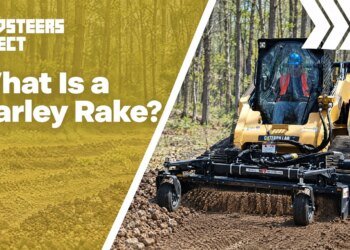
- Energy rake (Harley rake): Used within the ultimate degree to pulverize, stage, and blank the skin ahead of seeding or sodding. Crucial for residential garden prep.
Skid Steers Direct carries field blades, grader attachments, and land planes with specifications matched to straightforward skid steer hydraulic outputs. Clear out by means of attachment kind and device compatibility to seek out the best instrument to your section.
The Backside Line
Grading is not difficult as soon as what it is seeking to accomplish: water is going clear of the construction, the bottom is solid, and the skin is in a position for the following section. The correct attachment makes the adaptation between a two-pass activity and a ten-pass headache. Browse grading attachments at Skid Steers Direct: field blades, land planes, and gear rakes, all with compatibility specifications.