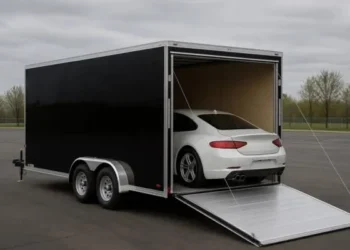

What Must You Know Earlier than Loading Automotive on Trailer?
Loading a automotive on a trailer safely is dependent upon 3 issues: opting for apparatus that may lift the automobile, positioning the auto so the trailer stays balanced, and securing all 4 corners earlier than transferring. Crucial paintings occurs earlier than the tires contact the ramps. You wish to have to verify the automobile weight, trailer payload capability, towing capability, ramp perspective, deck width, hitch ranking, tire situation, and tie-down means. When those main points are checked first, the true loading procedure turns into slower, calmer, and a lot more predictable.

Many loading issues get started when any individual treats a automotive hauler like an atypical application trailer. A automobile is a concentrated load with considerable weight, transferring suspension, and a excessive middle of gravity when compared with packing containers or construction fabrics. If the auto sits too some distance at the back of the axles, the trailer would possibly sway. If it sits too some distance ahead, the rear axle and hitch of the tow automobile is also overloaded. If the straps are connected to susceptible or flawed issues, the auto can shift even if each and every ratchet seems tight. A competent automobile trailer loading process will have to subsequently be handled as a deliberate delivery process quite than a snappy force up a couple of ramps.
This information explains load a automotive onto a trailer from the primary capability test to the overall walk-around inspection. It additionally covers low-clearance automobiles, non-running vehicles, electrical automobiles, tie-down alternatives, tongue weight, trailer sway, and the errors that steadily motive avoidable harm. Trailer designs and producer directions range, so all the time apply the boundaries proven at the trailer identity plate, tow automobile handbook, hitch label, tire sidewall, winch handbook, and tie-down apparatus. The ones rankings are extra necessary than a normal rule discovered on-line.
Why Right kind Automotive Trailer Loading Issues
Right kind loading assists in keeping the tow automobile, trailer, hitch, axles, tires, brakes, and load operating as one solid gadget. That steadiness issues maximum all through surprising braking, lane adjustments, downhill shuttle, crosswinds, and emergency guidance. A poorly located automobile could make the trailer really feel fearful even on a directly street. The driving force would possibly understand the trailer transferring back and forth, the guidance turning into mild, the rear of the tow automobile sitting surprisingly low, or the trailer brakes suffering to keep watch over the weight. Those aren’t small convenience problems. They’re warnings that the towing mixture is also out of doors a protected working situation.
Imagine a not unusual instance. A motive force quite a bit a mission automotive with the engine, the heaviest a part of the automobile, at the back of the trailer axles for the reason that automotive suits extra simply in that place. The trailer would possibly glance degree whilst parked, however the rear-heavy association reduces tongue weight. As soon as velocity will increase, a small motion led to through wind or guidance can develop into repeated trailer sway. The driving force then makes a sharper correction, which will building up the motion as an alternative of preventing it. Transferring the auto ahead through just a brief distance would possibly utterly trade how the trailer behaves for the reason that load is now urgent down at the hitch as an alternative of seeking to elevate it.
Right kind securement is similarly necessary. The parking brake and transmission are designed to carry a automobile whilst parked, to not function shipment restraints all through delivery. Highway vibration, suspension motion, braking forces, potholes, and cornering can all transfer an unsecured automotive. 4 appropriate tie-downs create impartial restraint issues and assist stay the automobile focused at the trailer. Taking overtime to test those connections is far more cost effective than repairing a broken bumper, wheel, suspension phase, trailer fender, or some other automobile at the street.
Select the Proper Trailer Earlier than Loading
The most secure technique to get started loading automotive on trailer apparatus is to verify that the trailer is in reality appropriate for the automobile. Don’t pass judgement on capability through trailer dimension or look. An extended metal deck would possibly nonetheless have a restricted payload for the reason that trailer itself makes use of a big a part of its gross automobile weight ranking. The helpful quantity is payload capability, which is in most cases the utmost accepted loaded trailer weight minus the empty trailer weight. The automobile, spare portions, equipment, gasoline bins, winch equipment, garage packing containers, and anything carried at the trailer all rely towards that loaded weight.
As an example, consider a trailer with a gross automobile weight ranking of seven,000 kilos and an empty weight of two,000 kilos. Its theoretical payload could be 5,000 kilos earlier than accounting for any further apparatus or producer restrictions. A 4,700-pound automobile would possibly seem to suit, however a fastened winch, spare tire, device chest, ramps, and equipment may push the whole past the prohibit. For this reason estimating from reminiscence is dangerous. Test the true automobile weight and evaluate it with the rankings proven at the trailer, tires, axles, hitch, and tow automobile.
Open Automotive Trailer or Enclosed Automotive Trailer
An open automotive trailer is steadily more uncomplicated to load for the reason that motive force and spotter can see the wheels, deck edges, and tie-down issues. Open trailers are generally lighter than enclosed fashions, which would possibly depart extra to be had towing and payload capability. They’re often used for on a regular basis automobiles, restore store delivery, observe vehicles, farm automobiles, and short-distance hauling. Their major limitation is publicity. The transported automotive stays open to rain, mud, salt, stones, bugs, tree branches, and public view.
An enclosed trailer protects the automobile from climate and street particles, however loading area may also be tighter. The facet partitions would possibly make it tricky to open the motive force’s door after the auto is located. An get away door, detachable fender, winch, or wheel basket gadget could make enclosed trailer loading a lot more uncomplicated. The enclosed frame additionally provides weight and creates extra wind resistance, so the tow automobile should have sufficient capability for the whole loaded mixture. When transporting a vintage automotive, race automotive, luxurious automobile, or freshly restored automobile, the added coverage would possibly justify the additional weight and value.
| Trailer Issue | What to Test | Why It Issues |
|---|---|---|
| Payload capability | Car weight plus all further shipment | Prevents axle, tire, body, and brake overload |
| Deck width | Tire width and clearance between fenders | Prevents tire or frame touch all through loading |
| Deck duration | Wheelbase and ultimate tie-down place | Lets in right kind steadiness with out overhang issues |
| Ramp perspective | Entrance bumper, splitter, exhaust, and breakover clearance | Reduces scraping and underbody harm |
| Brake gadget | Brake operation, controller surroundings, and breakaway gadget | Helps managed preventing with a heavy load |
| Anchor issues | Quantity, location, situation, and ranking | Supplies appropriate positions for four-point securement |
Test the Tow Car and Hitch Rankings
A trailer could have sufficient capability whilst the tow automobile does no longer. Earlier than loading, evaluate the anticipated loaded trailer weight with the tow ranking, gross mixed weight ranking, rear axle ranking, hitch ranking, and tire load capability of the tow automobile. Those limits paintings in combination, and the bottom related ranking controls the setup. A heavy-duty hitch does no longer building up the producer’s tow ranking, and upgraded rear springs don’t routinely building up the felony or engineered axle ranking. The entire mixture should keep inside each and every appropriate prohibit.
Tongue weight is a part of this calculation as it turns into load carried through the tow automobile. It impacts the rear axle, suspension, tires, guidance steadiness, and to be had payload. Passengers, gasoline, equipment, baggage, and equipment within the tow automobile additionally use payload capability. That is simple to omit when the trailer is inside its personal ranking however the truck is sporting a number of folks and a mattress filled with apparatus. A public automobile scale or appropriate tongue weight scale can give actual measurements when the margin is shut.
Check out the hitch connection earlier than riding onto the ramps. The coupler will have to be absolutely seated on the right kind dimension hitch ball, and the latch will have to be closed and secured. Pass the security chains underneath the coupler the place required so they are able to assist strengthen the trailer tongue if the primary connection fails. Connect the breakaway cable to a separate appropriate level at the tow automobile quite than looping it round a security chain. Attach the trailer plug and check the operating lighting, flip alerts, brake lighting, electrical brakes, and brake controller reaction.
Get ready the Loading House
Use company, degree, dry floor on every occasion conceivable. A degree floor makes alignment more uncomplicated and decreases the risk of the auto, trailer, ramps, or tow automobile transferring hastily. Unfastened gravel, dust, rainy grass, steep slopes, and asymmetric shoulders create pointless chance. Trailer jacks and ramp ends can sink into cushy surfaces when the automobile’s weight strikes onto the rear of the deck. If the bottom isn’t sturdy sufficient, the loading perspective would possibly trade all at once or a ramp would possibly slip.
Stay the trailer hooked up to the tow automobile all through loading until the trailer producer in particular supplies some other accepted process. The hooked up tow automobile is helping withstand rearward motion and decreases the risk of the trailer tongue lifting as the auto strikes up the ramps. Position the tow automobile in Park, practice its parking brake, and use wheel chocks the place suitable. Don’t rely simplest at the trailer tongue jack to strengthen a disconnected trailer whilst riding a automobile onto it.
Transparent the world across the ramps and either side of the trailer. Kids, pets, consumers, and pointless helpers will have to steer clear of the loading trail. Come to a decision who’s giving instructions earlier than the automobile strikes. One spotter is generally extra helpful than a number of folks making other hand alerts. The spotter will have to stay visual to the motive force, steer clear of the entrance and rear of the transferring automobile, and not stand between the auto and a set object.
Check out the Trailer Earlier than the Automotive Strikes
A pre-loading inspection is helping you to find issues whilst the trailer continues to be empty and simple to paintings round. Test each and every tire for right kind drive, visual harm, cracking, embedded gadgets, and ordinary put on. Trailer tires will have to be inflated in keeping with the trailer or tire necessities, no longer merely matched to the tow automobile drive. Check out the wheel nuts, wheels, hubs, suspension parts, wiring, brake traces, deck, fenders, ramps, and anchor issues. Any phase this is free, bent, badly corroded, or broken will have to be repaired earlier than loading.
Glance carefully at detachable ramps. Their hooks, pins, locks, or protecting tabs should are compatible the trailer appropriately. A ramp this is simplest resting towards the deck can slide backward when the pushed wheels practice energy. Verify that each ramps are similarly supported and aligned with the automobile tires. If the trailer makes use of hydraulic tilt or a tilting deck, check out the locking mechanism and apply the producer’s directions for elevating, decreasing, and securing the platform.
- Verify the trailer is coupled to the tow automobile and the hitch latch is secured.
- Test the security chains, breakaway cable, electric plug, and trailer brakes.
- Check out tire drive, tire situation, wheel nuts, hubs, and suspension.
- Test the deck, ramps, ramp locks, winch cable, and anchor issues.
- Take away free equipment, straps, blocks, and particles from the riding trail.
- Position wheel chocks the place wanted and ensure the loading space is degree.
Get ready the Automotive for Trailer Loading
Check out the transported automobile earlier than loading, particularly whether it is broken, changed, surprisingly low, or no longer operating. Test that the tires cling air and will roll freely. Verify that the guidance works and the wheels aren’t locked at an perspective. Glance beneath for free exhaust portions, placing frame panels, fluid leaks, or broken suspension parts that might catch at the ramps. Take away free pieces from the cabin, trunk, mattress, or roof as a result of they are able to transfer all through delivery.
Measure the auto when clearance is unsure. Vital dimensions come with overall width, out of doors tire width, wheelbase, entrance overhang, rear overhang, floor clearance, and the peak of any roof equipment. Evaluate those measurements with the distance between the trailer fenders, deck width, ramp width, enclosed trailer door opening, and inner top. Don’t suppose {that a} automobile will are compatible as a result of some other mannequin with a an identical frame taste are compatible up to now. Other wheels, tires, suspension settings, splitters, facet steps, and frame kits can trade the desired area.
Plan how the motive force will go out after the auto reaches its ultimate place. On a slim open trailer, the motive force’s door would possibly hit the fender. Inside of an enclosed trailer, there is also little or no facet clearance. Detachable fenders, trailer get away doorways, window get entry to, or winching the auto from out of doors can remedy this downside. Figure out the go out means earlier than loading so the motive force does no longer develop into trapped or harm the door after the automobile is already secured.
Learn how to Load a Low-Clearance Automotive on a Trailer
Low-clearance vehicles require extra than just riding slowly. The automobile can scrape at 3 details: the entrance bumper or splitter because it reaches the ramp, the middle underside the place the ramps meet the deck, and the rear bumper or exhaust because the automobile ranges out. An extended entrance overhang would possibly touch the ramp even if the broadcast floor clearance seems appropriate. Decreased suspension, aerodynamic portions, facet skirts, battery enclosures, and exhaust techniques should all be thought to be.
Cut back the loading perspective through hanging accepted ramp extensions or appropriate manner forums in entrance of the primary ramps. The function is to create a gentle transition quite than a surprising step. The forums should be sturdy sufficient for the automobile weight, broad sufficient to strengthen the tires, and located in order that they can not slide. Don’t construct an volatile stack of brief trees items. A moving board can drop the automobile onto the ramp edge and harm the tire, wheel, bumper, or underside.
A tilt trailer may also be helpful for sports activities vehicles and different low automobiles for the reason that deck and ramp shape an extended, smoother loading trail. Even with a tilt deck, test the breakover level close to the axle space. Air suspension can once in a while supply brief further clearance, however it will have to simplest be used in keeping with the automobile producer’s directions. If you can not verify protected clearance from the motive force’s seat, prevent and feature the spotter check out the entrance, middle, and rear of the automobile earlier than proceeding.
By no means position an individual beneath a in part loaded automobile to test clearance. Prevent the automobile, safe it towards motion, and check out from a protected place beside the trailer.
Pressure or Winch the Automotive Onto the Trailer
A operating automobile can generally be pushed onto a trailer when the ramps are safe, traction is just right, and the motive force has a transparent view or a competent spotter. Make a choice the bottom sensible tools and use delicate, stable throttle. Unexpected acceleration can spin the tires, transfer the ramps, or motive the automobile to leap ahead as soon as it reaches the deck. Stay the guidance wheel as directly as conceivable and make small corrections. If alignment starts to waft, prevent quite than seeking to repair a big error whilst transferring.
A winch provides extra keep watch over when the auto does no longer run, has mechanical harm, has restricted traction, or is simply too precious to chance riding in a confined area. The winch, cable or artificial rope, hook, mounting level, battery provide, pulley gadget, and attachment level should all be rated for the duty. Connect the winch to a manufacturer-approved restoration or towing level. Suspension palms, guidance portions, bumpers, and skinny frame constructions aren’t routinely appropriate pulling issues.
Stay folks clear of a tensioned winch line. Don’t stand without delay in entrance of, at the back of, or over the cable. Feed the road frivolously onto the drum and prevent if it starts stacking closely on one facet. A seize block would possibly trade the pulling route or building up mechanical merit, however it additionally adjustments the forces carried out to the apparatus. Apply the winch producer’s directions quite than improvising a pulley association.
| Loading Way | Best possible Used When | Primary Precaution |
|---|---|---|
| Using the auto | The automobile runs, brakes, and steers appropriately | Use delicate throttle and keep away from surprising motion |
| Electrical winch | The automobile is broken, non-running, precious, or tricky to get entry to | Use rated apparatus and an accepted automobile attachment level |
| Guide winch | The automobile is mild sufficient and loading is occasional | Verify the winch ranking and keep watch over the care for moderately |
| Tilt deck loading | The automobile has restricted floor clearance | Lock the deck appropriately after the automobile is located |
Step-by-Step Automotive Trailer Loading Process
Step 1: Attach and Stabilize the Trailer
Attach the trailer utterly earlier than loading. Decrease the coupler onto the right kind hitch ball, safe the latch, connect the security chains, attach the breakaway cable, and plug within the electric connector. Park the tow automobile and trailer in a directly line on degree floor. Follow the tow automobile parking brake and use appropriate wheel chocks if the skin or trailer design calls for them. This solid beginning place prevents the trailer from rolling or lifting when the auto’s weight reaches the rear of the deck.
Step 2: Set up and Safe the Ramps
Position each and every ramp at the right kind spacing for the automobile tires. Measure the out of doors tire width when visible alignment is hard. Lock or pin the ramps to the trailer in order that they can not transfer backward. Test that the decrease ends have complete touch with the bottom and the higher ends are seated frivolously towards the deck. Upload accepted extensions earlier than the primary ramps if the automobile has a low bumper, lengthy overhang, or restricted breakover clearance.
Step 3: Align the Car
Place the auto a number of ft at the back of the ramps so the motive force has sufficient distance to straighten the wheels. The tires will have to level without delay towards the middle of each and every ramp. Use a spotter the place visibility is proscribed, however agree on easy hand alerts earlier than transferring. The driving force will have to prevent in an instant if the spotter disappears from view. Excellent alignment on the backside prevents higher corrections close to the highest, the place the trailer is narrower and the effects of a mistake are better.
Step 4: Transfer Up the Ramps Slowly
Pressure or winch the auto ahead at a sluggish, managed tempo. Steer clear of preventing with the pushed wheels on the steepest a part of the ramp until vital, as a result of restarting would possibly require extra throttle. Concentrate for scraping and watch the tire place. The spotter will have to track the entrance bumper, underbody, wheels, fenders, and rear clearance. If any phase seems more likely to contact, prevent and alter the ramp setup quite than forcing the auto ahead.
Step 5: Place the Automotive for Right kind Steadiness
Don’t prevent merely for the reason that automobile is absolutely at the deck. Transfer it to a place that produces appropriate tongue weight whilst conserving sufficient room for tie-downs. The precise location is dependent upon the trailer axle place, automobile weight distribution, engine location, and producer directions. A front-engine automotive loaded ahead would possibly desire a other place from a rear-engine automotive, pickup truck, or electrical automobile. Marking a identified place at the deck turns out to be useful simplest when the similar automobile and loading association are used once more.
Step 6: Prevent and Safe the Car Briefly
As soon as the auto reaches the supposed place, position the transmission in Park for an automated or in tools for a handbook transmission, practice the parking brake, and turn off the engine. Those movements assist stay the automobile nonetheless whilst straps are put in, however they don’t change tie-downs. Test that the auto is focused between the trailer edges and fenders. Verify that there’s area to glue and rigidity each and every strap with out touch with tires, brake hoses, frame panels, or sharp steel.
Get the Weight Distribution Proper
Trailer steadiness isn’t one thing you will have to pass judgement on simplest through having a look on the tire place relative to the axles. The heavier finish of the transported automobile issues. A front-engine sedan would possibly position a lot more load at the trailer tongue than a rear-engine sports activities automotive parked in the similar wheel place. Electrical automobiles would possibly lift considerable battery weight around the flooring, whilst pickup vans can range relying on cab duration, mattress duration, drivetrain, and added apparatus. For this reason one fastened preventing level does no longer paintings for each and every automotive.
A often mentioned beginning vary for plenty of standard bumper-pull trailers is tongue weight equivalent to roughly 10 to fifteen p.c of the loaded trailer weight. This isn’t a common instruction. Apply the boundaries said through the trailer, hitch, and tow automobile producers. Too little tongue weight can inspire trailer sway, whilst an excessive amount of can overload the hitch or rear axle and cut back guidance reaction on the entrance of the tow automobile. A scale supplies higher data than guessing from how some distance the truck suspension drops.
After loading, view the combo from the facet. The tow automobile and trailer will have to no longer display excessive sagging or an clearly nose-high trailer. Alternatively, look by myself can not verify felony axle weights or right kind tongue weight. When transporting a heavy automobile or working on the subject of rated capability, weigh the loaded mixture through axle staff. This displays whether or not the entrance axle, rear axle, trailer axles, overall trailer weight, and mixed weight are inside their rankings.
Indicators the Automotive Might Be Too A long way Again
A automotive located too some distance at the back of the trailer axles would possibly produce mild tongue weight. The tow automobile can really feel surprisingly mild on the rear connection, and the trailer would possibly react strongly to wind, passing vans, or small guidance actions. Sway that looks as velocity will increase is a significant caution. Don’t attempt to remedy a loading downside through riding quicker, making fast guidance corrections, or depending simplest on an anti-sway tool. Decelerate safely, prevent, and reposition the automobile.
Indicators the Automotive Might Be Too A long way Ahead
Over the top ahead loading could make the rear of the tow automobile take a seat low and the entrance really feel mild. Guidance, braking steadiness, headlight goal, suspension shuttle, and rear tire loading can all be affected. The hitch, coupler, trailer body, and rear axle might also lift extra load than accepted. A weight-distribution hitch would possibly assist arrange sure accepted towing mixtures, however it can not make an overloaded tow automobile or trailer protected. The shipment place and overall weights nonetheless want to be corrected.
Learn how to Tie Down a Automotive on a Trailer
Use 4 impartial vehicle-rated tie-down assemblies until the trailer or securement gadget specifies some other accepted association. Each and every tie-down will have to hook up with an appropriate trailer anchor and an accepted level at the automobile or wheel restraint gadget. Test the operating load prohibit of each and every strap, chain, hook, ratchet, and anchor. The entire gadget is simplest as sturdy as its weakest element. A heavy strap does no longer assist if it is attached to a gentle anchor or broken hook.
Wheel straps are widespread as a result of they safe the tires whilst permitting the automobile suspension to transport naturally. Commonplace designs come with over-the-tire straps, basket straps, and techniques that pull the tire towards devoted deck anchors. Those techniques should fit the tire dimension and trailer format. The strap will have to take a seat appropriately at the tire and stay transparent of sharp bodywork, brake portions, and guidance parts. Recheck the placement after tensioning for the reason that strap can transfer towards the interior or out of doors fringe of the tread.
Axle straps or accepted body attachment issues is also used when appropriate for the precise automobile and trailer. Fashionable automobiles may have delicate suspension portions, plastic covers, air traces, brake hoses, battery constructions, aerodynamic panels, and digital sensors beneath. By no means wrap a strap round an element just because it seems to be sturdy. Seek the advice of the automobile producer or a professional delivery skilled when accepted securement issues aren’t obtrusive.
Stay Straps Directly and Safe
A tie-down will have to pull in an invaluable route with out rubbing towards sharp edges. Twisted webbing can cut back even loading and make inspection harder. Use edge coverage the place the strap may touch steel, however don’t permit protectors to create a free connection. Place ratchets so they are able to be operated safely and won’t hit the automobile. After tightening, safe the free strap tails in order that they can not flap within the wind, drag at the street, or wrap round a tire or axle.
Do No longer Rely at the Winch as a Tie-Down
A loading winch is meant to drag the automobile onto the trailer. Until the winch and trailer producer in particular approve it as a part of the delivery securement gadget, it will have to no longer change the desired tie-downs. The winch line can lose rigidity as the auto strikes on its suspension, and surprise quite a bit can harm the road, drum, gears, or mounting construction. After the auto is secured with the right kind restraints, the winch line can generally be comfy or controlled in keeping with the apparatus directions.
Entire the Ultimate Protection Inspection
Stroll round all the trailer in the end tie-downs are tensioned. Test that the automobile is focused, each and every tire is absolutely supported, and no frame phase is touching the fenders, rails, winch, toolboxes, or trailer partitions. Verify that each and every hook is correctly seated and can not detach if the strap in short loses rigidity. Ensure that the ratchets are closed, strap tails are secured, and the webbing isn’t twisted, minimize, frayed, melted, or rubbing towards a pointy floor.
Take away the ramps and lock them of their delivery place. Ramps saved underneath the deck should be absolutely inserted and pinned. Ramps carried at the facet or rear will have to have safe protecting gadgets quite than depending on gravity. Shut and latch tilt decks, loading doorways, get away doorways, cupboards, and toolboxes. Test that no free blocks, wheel chocks, gloves, or equipment stay at the trailer deck.
Check the lighting and brakes once more as a result of loading process can disturb cables or connectors. Verify the coupler latch, hitch pin, protection chains, breakaway cable, jack, and electric plug. Take a look at the trailer tires to ensure they aren’t visibly overloaded or contacting the fenders. Alter the trailer brake controller in keeping with the producer’s process and street stipulations. The loaded trailer would require a distinct braking reaction from an empty trailer.
- The automobile is focused and located for appropriate tongue weight.
- 4 accepted tie-downs are put in, tensioned, and undamaged.
- Hooks, ratchets, anchors, and wheel straps are seated appropriately.
- The hitch latch, protection chains, breakaway cable, and trailer plug are safe.
- Ramps, doorways, tilt decks, toolboxes, and free apparatus are locked.
- Trailer lighting, brakes, tires, and wheel clearance had been checked.
Recheck the Automotive After You Get started Using
Tie-downs can settle after the automobile starts transferring. Tires flex, straps seat into place, suspension strikes, and webbing would possibly modify rather round a wheel or attachment level. Prevent in a protected location after the primary few miles and check out each and every connection. A not unusual sensible period is inside the first 5 to ten miles, adopted through tests all through gasoline, leisure, or meal stops. Extra widespread inspections is also wanted on tough roads, all through critical climate, or after arduous braking.
Contact each and every ratchet and search for visual lack of rigidity quite than assuming the straps are nonetheless tight for the reason that automotive has no longer moved. Test whether or not hooks have turned around, wheel baskets have shifted, or webbing has began rubbing towards an edge. Check out the hitch, chains, plug, tires, hubs, and saved ramps. Prevent once more if the trailer starts dealing with another way. New sway, vibration, noise, warmth, or guidance adjustments can point out a creating downside.
Particular Concerns for Other Cars
Loading an Electrical Car
Electrical automobiles are steadily heavier than in a similar way sized gas automobiles on account of their battery packs. Verify the precise curb weight and don’t depend at the weight of some other mannequin with a an identical frame. The underfloor battery enclosure too can cut back breakover clearance and should no longer touch the ramp or deck edge. Use simplest accepted towing, restoration, lifting, and tie-down issues. An unsuitable attachment can harm the battery housing, cooling gadget, high-voltage parts, or aerodynamic panels.
Some electrical automobiles have particular delivery modes, air suspension settings, parking procedures, or restrictions on wheel motion. Apply the landlord’s handbook moderately. A automobile with a broken high-voltage battery would possibly require specialist restoration and garage procedures quite than atypical trailer delivery. Caution indicators corresponding to smoke, warmth, hissing, ordinary odors, sparks, or battery harm will have to be handled severely.
Loading an All-Wheel-Pressure Car
A complete trailer that assists in keeping all 4 wheels off the street is in most cases used when transporting an all-wheel-drive automobile over distance, however the automobile producer stays the right kind supply for towing restrictions. Don’t pull an all-wheel-drive automotive with just one axle at the street until the producer in particular lets in that association. Drivetrain harm can happen when the wheels rotate in some way the gadget used to be no longer designed to care for. Transmission place and delivery mode will have to additionally apply the landlord’s handbook.
Loading a Broken or Non-Working Automotive
A broken automotive would possibly not roll, steer, or brake generally. A locked wheel can drag the automobile sideways and pull it off the ramps. Damaged suspension can cut back floor clearance or permit the frame to touch a tire. Use wheel skates, dollies, a correctly rated winch, or skilled restoration apparatus when wanted. Don’t ask folks to push from at the back of whilst someone else controls a winch. A surprising unencumber or cable failure may position everybody within the threat space.
Test for leaking gasoline, oil, coolant, brake fluid, and battery electrolyte earlier than loading. Leaks can create hearth, environmental, and traction hazards. Broken doorways, hoods, trunks, bumpers, and frame panels will have to be secured in order that they can not open or detach all through delivery. Photographing the automobile earlier than loading may be helpful for documenting present harm and confirming its situation earlier than the shuttle.
Commonplace Errors When Loading Automotive on Trailer
Guessing the Car and Trailer Weight
Weight estimates are steadily mistaken after equipment, higher tires, equipment, gasoline, batteries, winches, spare portions, and adjustments are added. A trailer that treated a lighter automotive safely is also overloaded through a bigger SUV or electrical automobile. Test labels and exact scale weights the place conceivable. Leaving an inexpensive capability margin too can assist account for apparatus that used to be no longer integrated in a elementary curb-weight determine.
Loading the Automotive Too A long way Again
Rear-heavy loading is without doubt one of the most deadly errors as a result of it may well create low tongue weight and trailer sway. Drivers once in a while transfer the auto backward to cut back tow automobile sag with out measuring axle quite a bit. This may occasionally remedy one visual factor whilst making a extra severe steadiness downside. The proper reaction is to test the whole weights, hitch setup, tow automobile capability, and automobile place quite than depending on look.
The usage of Best Two Straps
Two straps don’t give you the identical impartial restraint as an appropriate four-point gadget. If one connection loosens or fails, the rest strap would possibly not keep watch over the automobile. 4 accepted tie-down issues assist withstand ahead, rearward, and sideways motion. Don’t use the parking brake, transmission, winch cable, or a unmarried chain as an alternative to right kind securement.
Attaching Straps to the Improper Portions
Keep an eye on palms, guidance hyperlinks, anti-roll bars, exhaust portions, bumpers, and skinny body sections would possibly bend or fail underneath tie-down power. Fashionable automobiles steadily disguise necessary cables, sensors, brake hoses, and battery parts beneath. Use wheel straps or recognized securement issues. If you find yourself unsure, download model-specific data earlier than tightening the strap.
Loading on an Volatile Floor
Comfortable or sloping floor can permit the tow automobile, trailer, ramps, or strengthen legs to transport all through loading. The trailer would possibly seem solid till the auto’s rear axle reaches the ramp and shifts the weight. Select degree pavement or some other company floor on every occasion conceivable. If stipulations are unsafe, transferring to a greater loading location is generally quicker than recuperating a automobile that has slipped off a ramp.
Forgetting to Safe the Ramps
A ramp can slide even if it feels heavy and solid through hand. Pushed wheels practice power in a distinct route, particularly when the motive force makes use of additional throttle. At all times use the designed pins, hooks, locks, or protecting gadget. After loading, retailer and safe the ramps earlier than departure. An unsecured ramp can develop into a perilous street danger.
Loading in Rain, Wind, or Darkness
Rainy ramps cut back tire traction and will make painted metal, picket, or aluminum surfaces slippery. Sluggish the method, blank dust and oil from the ramps, and use a winch when managed riding isn’t conceivable. Don’t atone for deficient traction with competitive acceleration. The tires would possibly spin after which all at once grip, inflicting the auto to leap ahead. If heavy rain prevents the spotter from seeing tire place or hand alerts, look forward to more secure stipulations.
Sturdy crosswinds can impact open automobile doorways, loading ramps, enclosed trailer doorways, and the tow automobile itself. Stay doorways managed and keep away from loading beside fast-moving site visitors. At night time, use fastened lights that illuminates the ramps, deck edges, tires, anchor issues, and surrounding space. A hand held flashlight turns out to be useful for inspection however will have to no longer be the one mild supply whilst the automobile is transferring.
Continuously Requested Questions
Must a Automotive Be Targeted Immediately Over the Trailer Axles?
No longer essentially. The proper place is the positioning that assists in keeping the automobile inside the trailer deck, lets in right kind securement, and produces appropriate tongue weight with out overloading any axle or hitch element. Car weight distribution issues up to wheel place. A front-engine automotive and a rear-engine automotive would possibly want other preventing issues at the identical trailer. Use producer steering and exact weight measurements when conceivable.
Must I Load a Automotive Going through Ahead or Backward?
Many front-engine automobiles are loaded dealing with ahead as a result of this steadily puts the heavier finish towards the trailer tongue, however that isn’t a rule for each and every mixture. A rear-engine automotive, ordinary trailer axle place, or restricted tie-down format would possibly require a distinct association. The general selection will have to supply right kind steadiness, good enough clearance, safe tie-down angles, and protected get entry to. Don’t load backward just because it’s more uncomplicated with out checking tongue weight.
How Many Straps Are Had to Tie Down a Automotive?
A four-point securement gadget with vehicle-rated apparatus is the typical manner for transporting a automotive on a trailer. This offers each and every nook an impartial restraint and is helping keep watch over motion in numerous instructions. The specified strap ranking and attachment means rely at the automobile, trailer, native laws, and kit design. Check out each and every strap and anchor earlier than use, and change broken webbing or {hardware}.
Can I Use Strange Shipment Straps?
Use straps and {hardware} designed and rated for automobile delivery. Gentle shipment straps would possibly not have sufficient operating load capability, appropriate hooks, abrasion resistance, or safe ratchets. The ranking label will have to stay readable. Don’t use straps with cuts, burns, critical fraying, damaged sewing, bent hooks, broken ratchets, or unknown capability.
Must the Parking Brake Keep On Throughout Delivery?
The parking brake may also be carried out after positioning the auto until the automobile producer provides other delivery directions. The transmission will also be positioned in Park or the really useful tools. Those measures are secondary. The automobile should nonetheless be secured with accepted tie-downs for the reason that parking brake and transmission aren’t shipment restraint techniques.
Can the Winch Dangle the Automotive Throughout the Shuttle?
A winch will have to no longer be handled as the primary tie-down until the apparatus and trailer producers in particular approve that use. Set up the desired automobile restraints after loading. The winch line is also left hooked up, comfy, or disconnected in keeping with the accepted setup, however it will have to no longer change 4 appropriate securement issues.
How Tight Must Automotive Trailer Straps Be?
The straps will have to be tensioned sufficient to take away slack and cling the automobile securely with out destructive the tire, wheel, suspension, frame, or attachment level. Apply the strap producer’s directions. Extra power isn’t all the time more secure. Over-tightening can harm ratchets, anchors, automobile portions, and tire straps. Recheck the strain after the primary few miles for the reason that gadget would possibly settle.
How Regularly Must I Test the Tie-Downs?
Check out the tie-downs in a while after beginning the shuttle, often inside the first 5 to ten miles, and test them once more at gasoline and leisure stops. Prevent faster if the trailer dealing with adjustments, you pay attention a brand new noise, or the street is surprisingly tough. Each and every inspection will have to come with the straps, hooks, ratchets, anchors, hitch, protection chains, tires, saved ramps, and trailer doorways.
What Must I Do If the Trailer Begins Swaying?
Keep calm, cut back velocity steadily, stay the guidance managed, and keep away from surprising braking or sharp guidance. Use the trailer brake keep watch over moderately if the gadget and stipulations permit it. Transfer to a protected preventing location and check out the weight place, tongue weight, tires, hitch, and tie-downs. Don’t proceed at commonplace velocity till the motive has been corrected.
Can I Load a Automotive Onto a Disconnected Trailer?
Loading a disconnected trailer could cause the tongue to upward thrust, the trailer to roll, or the strengthen jack to fail. Stay the trailer connected to the tow automobile until the trailer producer supplies a particular process and strengthen gadget for disconnected loading. A trailer designed for impartial loading would possibly use stabilizer legs or some other engineered association, however atypical tongue jacks aren’t an alternative to complete strengthen.
What Is the Best possible Trailer for a Low Sports activities Automotive?
A trailer with a low deck, lengthy ramps, ramp extensions, detachable fenders, or a hydraulic tilt deck could make low-clearance loading more uncomplicated. Your only option nonetheless wishes sufficient payload, deck width, tie-down issues, and towing compatibility. Measure the automobile’s entrance overhang, wheelbase, floor clearance, and breakover perspective earlier than opting for the trailer. A low deck by myself does no longer make it possible for the entrance splitter or middle underside will transparent.
Can One Individual Load a Automotive on a Trailer?
One skilled particular person would possibly load a automobile the usage of a winch, far off keep watch over, mirrors, cameras, and an appropriate trailer, however a educated spotter generally improves visibility and keep watch over. The spotter can track wheel alignment, underbody clearance, and the gap to the entrance stops. When loading by myself, prevent often and check out from out of doors quite than seeking to right kind unsure alignment from the motive force’s seat.
Conclusion
Loading a automotive on a trailer safely starts with correct rankings, appropriate apparatus, and a solid loading space. Attach and check out the trailer earlier than putting in the ramps. Align the automobile moderately, transfer slowly, and prevent at a place that creates suitable tongue weight quite than just hanging the tires over the axles. Safe the auto with accepted tie-down apparatus at 4 appropriate issues, then check out the hitch, brakes, tires, lighting, ramps, anchors, and each and every strap earlier than departure.
The most efficient loading procedure is repeatable. Use the similar tick list each and every time, even whilst you know the automobile and trailer smartly. Stipulations trade, straps put on, tire drive drops, electric connections loosen, and other shipment adjustments the steadiness. A couple of additional mins spent checking the setup can save you trailer sway, automobile harm, apparatus failure, and roadside delays. When the automobile weight, attachment issues, or trailer capability is unsure, prevent and ensure the right kind data earlier than transferring.