
Information is all over in building initiatives. Emails. BIM fashions. activity website pictures.
At the present time, the problem that groups face isn’t about accumulating information, however turning it into insights and working out.
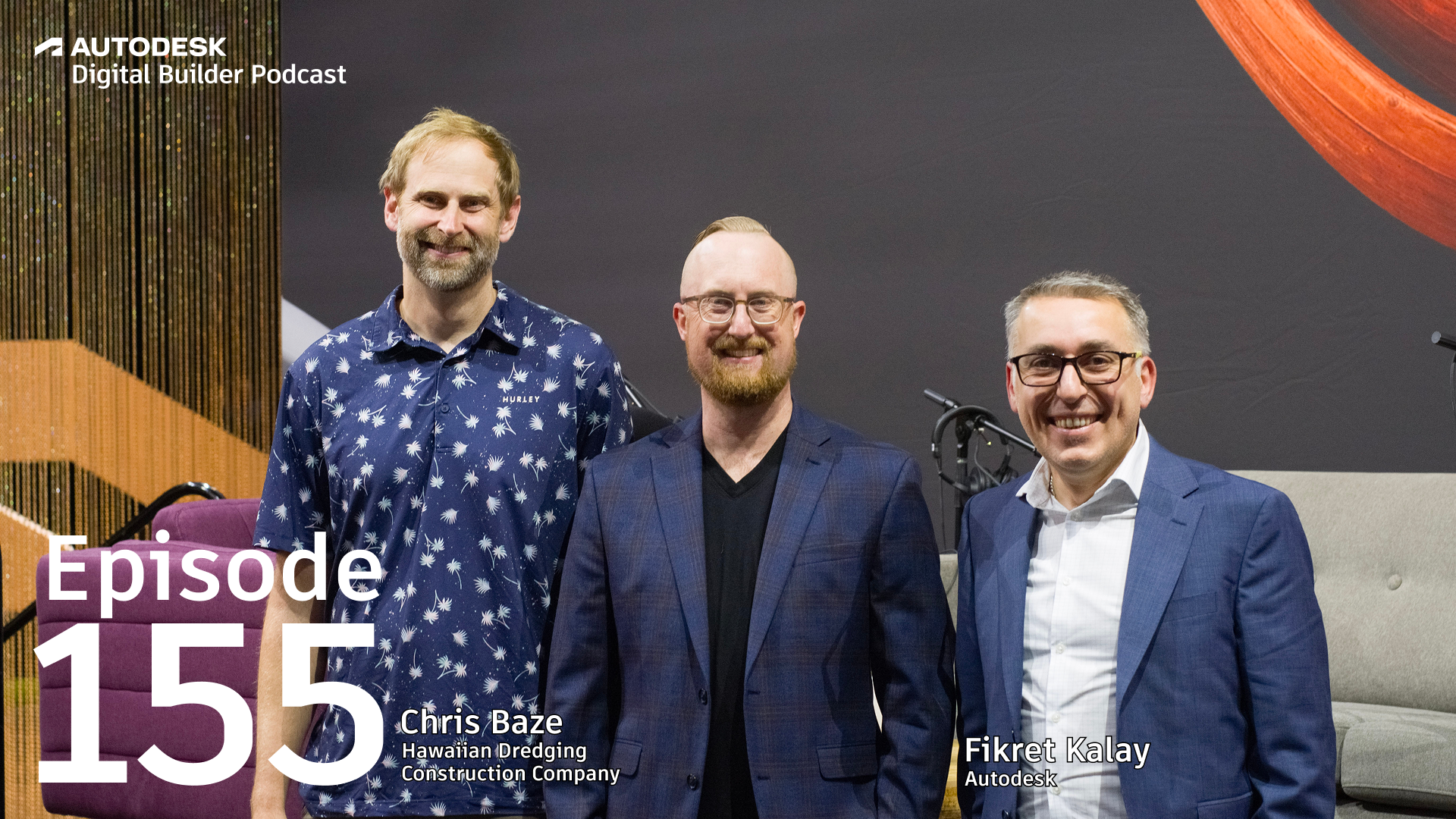
Chris Baze, Director of Development Era at Hawaiian Dredging Development Corporate (HDCC), and Fikret Kalay, Director at Autodesk Analysis, understand how laborious it may be to attach the dots throughout all that data. The excellent news? There’s some thrilling analysis underway to bridge the ones gaps and assist building groups make higher, extra knowledgeable choices.
In this newest episode of the Virtual Builder podcast, Chris and Fikret speak about a analysis undertaking that explores how AI can assist create a real-time working out of the jobsite and permit groups to make higher choices earlier than issues have an effect on time table and value.
Watch the episode now
In this episode
We speak about:
- Why building groups fight to show huge quantities of undertaking information into actionable insights
- The significance of connecting information, workflows, and context around the building lifecycle
- How Autodesk Analysis and Hawaiian Dredging are exploring AI to create a extra whole image of what is taking place at the jobsite
- How AI can assist groups perceive now not simply what took place, however why it took place
- The chance to maintain institutional wisdom and shift from experience-based to data-based decision-making
- What AI-powered chance control, jobsite simulation, and resolution beef up may appear to be within the years forward
The space between information and working out
Development groups generate huge quantities of information each day. However having information and figuring out what to do with it are two various things.
As Fikret places it, “We’re transferring from accumulating information to connecting information.”
As initiatives transfer from design thru building and operations, data passes between other groups and methods. Alongside the way in which, connections get misplaced, and it will get tougher to look the total image.
Fikret issues to analyze appearing that 95% of building information is going unused. “Why? As it’s very tough to seek out the knowledge, to seek out what the issue is said to, or the place to seek out that electronic mail that gave additional information. The image, the RFI, the time table—all this data could be very tough to attach.”
How does that wealth of information display up at the activity website?
Chris echoes Fikret’s sentiment and notes that having extra information does not essentially provide help to perceive what is taking place on a undertaking. He says that one commonplace method the knowledge hole manifests itself is in the course of the rising quantity of digicam pictures groups accumulate.
“I feel one of the most main adjustments just lately is pc imaginative and prescient. We’ve got all had cameras on website for a very long time, and the ones cameras went from 1080P cameras to 4K cameras, which is 4 instances the quantity of information. In order that provides up in no time.”
He continues, “We now have generally masses of terabytes of laborious drives on a task website now simply to obtain that video pictures. And it is nice. You’ve got an incident, you’ll be able to return, you’ll be able to manually retrieve it, however now we are discovering much more price the use of pc imaginative and prescient to show it into an ongoing information movement, now not simply of pixels, however of occasions, actions, and what is going on to your activity website.”
The significance of context and collaboration
Development initiatives convey a couple of events in combination, and every stakeholder has their very own piece of the puzzle. The fashion designer has the plans and specs, the contractor has schedules and jobsite studies, and the landlord has undertaking necessities and operational priorities.
Because of this connecting groups and knowledge is significant. Even the most efficient collaborators can fight to make knowledgeable choices if they do not have get entry to to the similar data and context.
“The development business is somewhat collaborative. “In the event you see what number of stakeholders have interaction with every different, it is somewhat spectacular,” Fikret issues out.
“However at the turn aspect, the knowledge isn’t. From the design to operations—the extra we undergo every level, the extra fragmented the knowledge is. The extra we move in the course of the steps, the fewer the knowledge stays attached and the extra we lose the context.”
Imagine a water leak on a jobsite. Recognizing the leak tells you what took place, however it does not provide an explanation for why it took place. To get to the basis motive, groups want to have a look at the encompassing data, together with undertaking drawings, website stipulations, and former choices.
“Going past the ‘what’ and seeking to perceive why it is taking place is essential, which is why we want context,” Fikret explains.
He highlights 3 spaces that groups want to attach:
- Information: Bringing in combination data from other assets so groups can see how the entirety relates.
- Workflows: Connecting actions like development monitoring, scheduling, and logistics to know how one factor impacts the remainder of the undertaking.
- Determination-making: Taking pictures now not simply what groups determined, however why, so they are able to practice the ones courses to long run initiatives.
The earlier groups have that context, the earlier they are able to deal with issues earlier than prices pile up.
As Fikret places it, “In the event you get to grasp the context on the early level, then the 5 million turns into perhaps much less, perhaps 10K. You begin to deal with the issue quicker quite than later.”
The analysis undertaking aimed toward serving to groups flip information into working out
To assist building groups use their information higher, Autodesk Analysis is operating with Hawaiian Dredging on a undertaking that connects data around the building lifecycle.
The purpose of the initiative? To convey undertaking information into one ecosystem, the place groups can in finding data and know how other items relate to one another.
Connecting undertaking information in the course of the information hive
Fikret walks thru an instance involving a wall. In a BIM type, it’s possible you’ll see fundamental data like its thickness. Drawings and specs supply extra information about the fabrics, insulation, and studs. In the meantime, jobsite pictures display what that wall in reality seems like throughout building.
All of this data pertains to the similar wall, however it may well reside elsewhere.
The analysis group is operating to attach the ones information so other folks can get entry to the total image with out leaping between methods.
“We created this platform that we name the knowledge hive, the place the entirety is centralized. So you’ll be able to seek in a a lot more complex, clever method. We make that information machine-readable,” says Fikret.
Now, discovering data is simply step one. Groups additionally want to perceive what is taking place at the jobsite and why.
As an example, assume anyone spots moisture on a wall. A photograph displays the wear, however it does not provide an explanation for the place the water got here from.
When that picture connects to the BIM type and different undertaking information, groups can examine close by components, equivalent to a pipe above the ceiling or some other room experiencing the similar factor.
Trying out the analysis on genuine initiatives
Connecting information in a analysis setting is something. Making it helpful on an energetic building website is some other.
That is the place Hawaiian Dredging is available in.
“Running with Chris and HDCC has been very productive and helpful for us as a result of we perceive the actual issues, we stress-test our workflows, and check out to ensure that we upload price once we resolve a genuine business drawback,” Fikret says.
The collaboration is helping Autodesk Analysis verify its means towards exact jobsite demanding situations and be told what building groups want from their information.
Going from experience-based choices to data-based choices
Ask an skilled superintendent to stroll thru a jobsite, and likelihood is that they are going to spot problems that anyone more recent to the business may omit. After a long time in building, they have got discovered to acknowledge caution indicators and wait for issues earlier than they escalate.
However what occurs when the ones skilled execs retire and take all that wisdom with them?
“For me, it’s all about transitioning the business from experience-based to data-based decision-making,” says Chris.
“We now have numerous in reality skilled superintendents, undertaking managers, individuals who were round 30, 40-plus years, they usually see one thing, they usually know what the ones issues are. The ones persons are retiring, and they are being changed by way of other folks of their first, 2d, or 3rd activity. And they do not have that perception that the business veterans do.”
Chris sees the analysis initiative as a chance to seize that experience and make it to be had to everybody.
As an example, skilled group individuals may log problems in Forma, together with pictures that assist provide an explanation for what went flawed. Groups may additionally feed jobsite sensor information, equivalent to moisture meter readings, into the gadget so as to add context.
That data may then assist less-experienced staff acknowledge equivalent issues and know how to handle them.
“If that context resides within the heads of people who find themselves at the jobsite, then I am not doing my activity neatly,” Chris explains.
“I feel what we are seeking to do is embed, ‘Howdy, that is what took place at the jobsite, because of this it took place, and this is the way you mitigate it.’”
Fikret is of the same opinion, mentioning that the reasoning at the back of choices frequently is going undocumented. Taking pictures that wisdom in a shared information ecosystem would assist groups be told from previous studies, even after the folk concerned have moved on.
Serving to groups transfer from perception to motion
Any other house Autodesk Analysis is exploring helps groups work out subsequent steps in response to their undertaking information.
Fikret returns to the instance of moisture showing on drywall. The group may have pictures of the wear, humidity sensor readings, temperature information, and different undertaking information. As an alternative of getting anyone manually piece the entirety in combination, the knowledge hive may analyze the ideas and counsel imaginable reasons.
“It’ll supply you perhaps 3 or 4 hypotheses of what will have took place,” Fikret explains. “And it’s going to percentage that overtly with you and say, ‘K, those are the 3 hypotheses I consider you will have to discover.’”
From there, groups can upload extra context. Anyone may point out {that a} main typhoon hit the construction the day earlier than. With that new data, the gadget may rethink its preliminary assumptions and counsel that the moisture got here from a subject with the outside facade quite than a plumbing leak.
“On the finish, you’re making the verdict, you report that call, and also you provide an explanation for once more why you consider that is the proper resolution, so we will report that and do higher,” explains Fikret.
Chris additionally sees alternatives past day by day troubleshooting. He issues to guaranty claims involving pipes hidden inside of partitions or concrete. Common truth seize may assist groups spot set up problems earlier than the ones pipes get lined up.
“I feel there are longer-term implications of now not best what took place as issues throughout the undertaking, but additionally what took place after you delivered the undertaking that we could possibly catch and now not have occur on our subsequent undertaking.”
What may this appear to be 5 to ten years from now?
Talking of long-term implications, there is lots to look ahead to in terms of AI and building information. Whilst Autodesk and HDCC are nonetheless in analysis mode, each Chris and Fikret see alternatives to switch how groups serve as.
For Fikret, the following 5 years are about making improvements to chance control and serving to building professionals make higher choices sooner.
Imagine a state of affairs the place a contractor expects two vehicles of fabrics, however one breaks down. The group has simply 10 mins to come to a decision which fabrics to prioritize.
AI may assist by way of temporarily examining how every choice would impact the time table, staff, and kit, then suggesting imaginable classes of motion.
“AI can assist boost up collecting the suitable insights, like how that is going to have an effect on the time table, staff, and the jobsite,” Fikret explains.
Having a look additional forward, Fikret envisions a long run the place groups may “simulate a complete jobsite task earlier than it occurs.”
Chris, in the meantime, hopes generation will assist align the pursuits of everybody running on a undertaking.
“I feel by way of surfacing what is going on and the way it affects the undertaking, it’ll assist us higher align our pursuits,” he says.
As an example, if a subcontractor places in further effort to make downstream paintings more straightforward, higher undertaking information may assist seize that contribution and make sure it will get identified.
In the end, Chris hopes those gear will assist everybody know how their choices impact the undertaking as a complete.
New episodes each week
Virtual Builder is hosted by way of me, Eric Thomas. Consider, new episodes of Virtual Builder move reside each week. Concentrate to the Virtual Builder Podcast on:
or anywhere you concentrate to podcasts.